
Problem-solving methods
Maths heuristics, decoded from the words in the question
The short version
Heuristics are the problem-solving methods Singapore primary schools teach for problem sums, from P1. Schools usually teach twelve, in four families, and add named methods such as units and parts. A child picks one by the words in the question. Below are the 11 we explain, the words that call for each, the year it starts and a real question worked with it.
- 1.
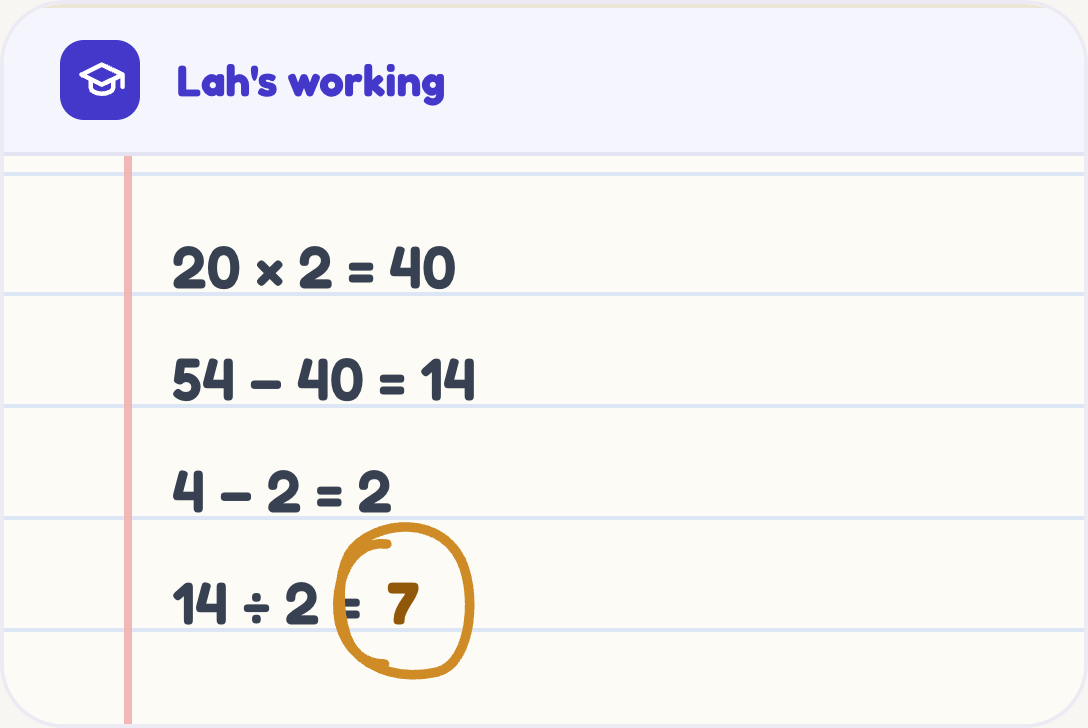
A farm has chickens and rabbits, 8 heads and 22 legs in all. How many rabbits are there?
Assumption method - 2.
Mei spent of her money on a bag, then of the remainder on a book.
Branching method - 3.
At first Ali had 3 times as many stamps as Ben. Then he gave Ben 12 stamps.
Before and after method
The method finder
Which heuristic does this question need?
Find the words, follow the row. Each row is a method's own tell, drawn the way your child draws it, with the years it is taught.
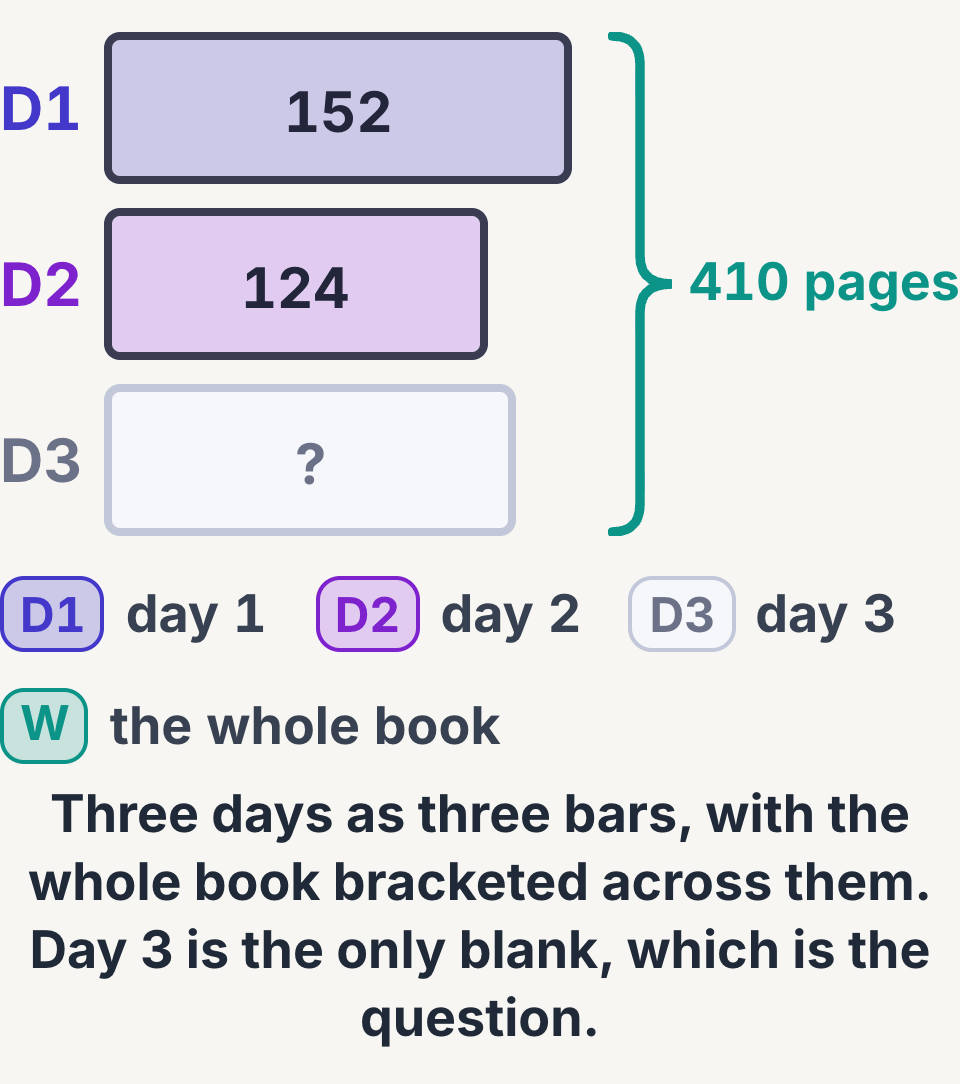 “28 fewer pages than”Bar model →More, fewer, altogether
From P1
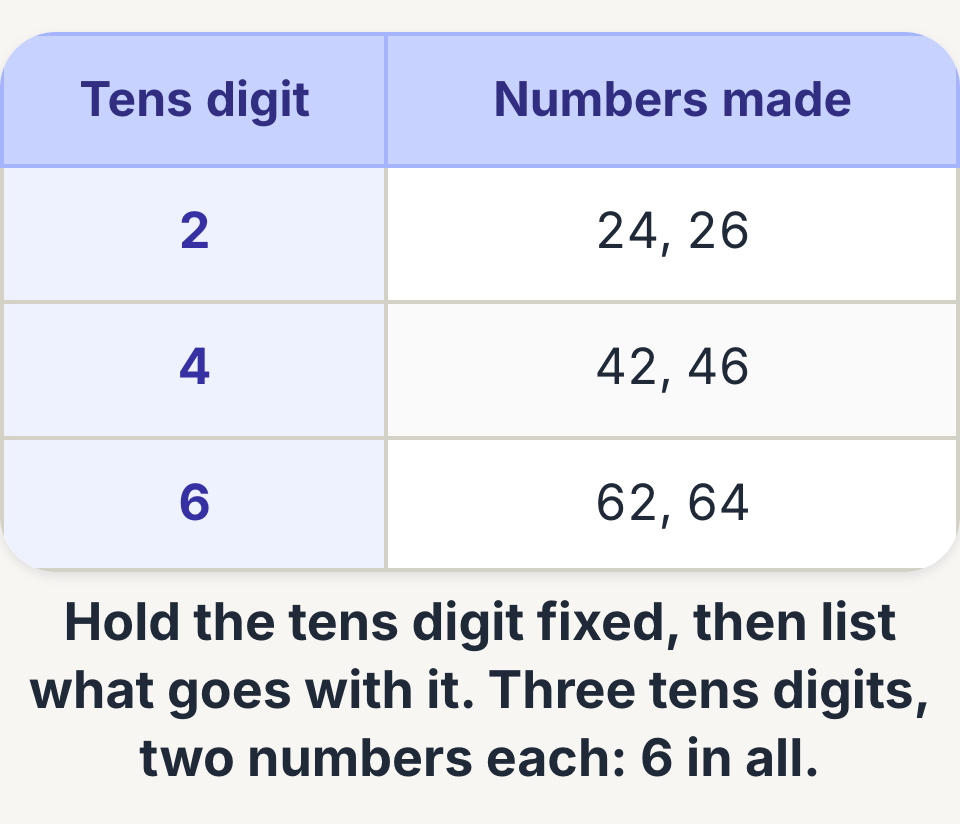 “How many different ways”Systematic list →How many different ways
From P1
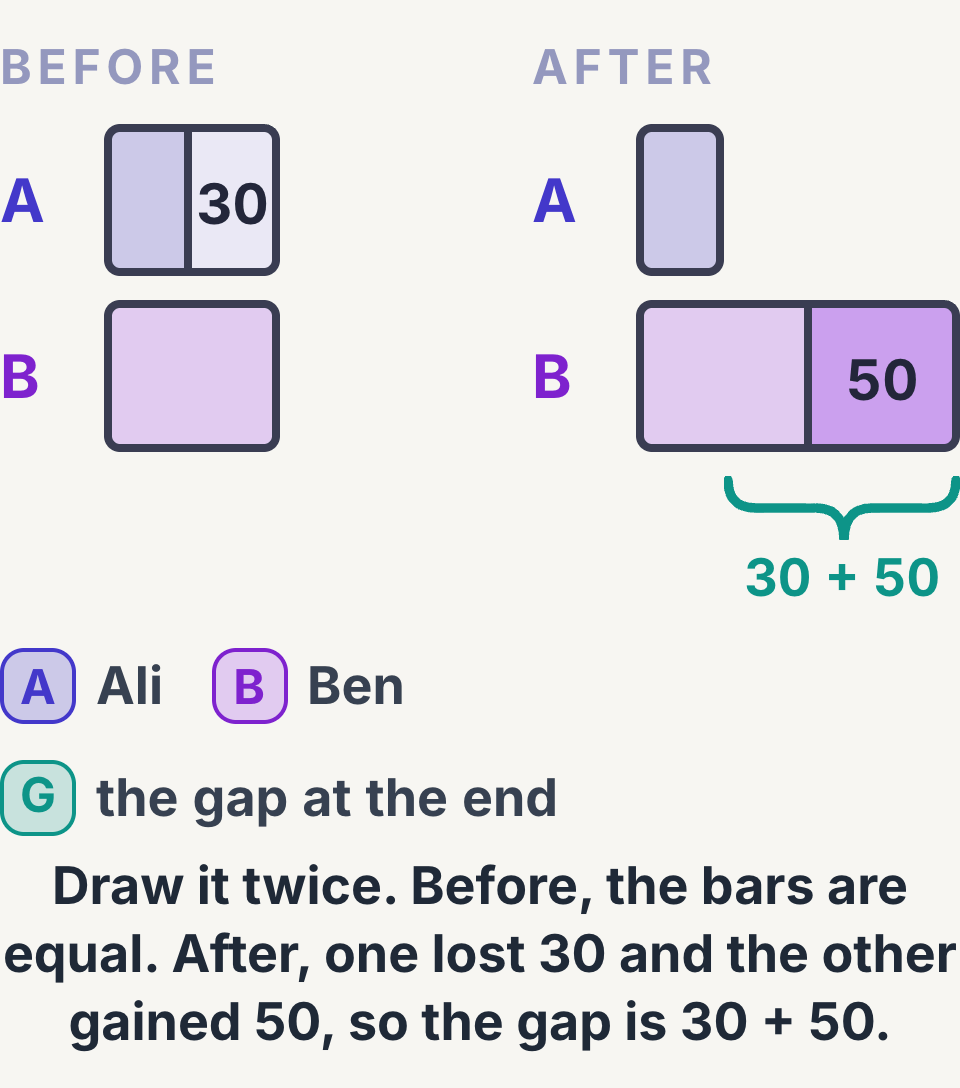 “at first”Before and after method →Something changes partway
From P1
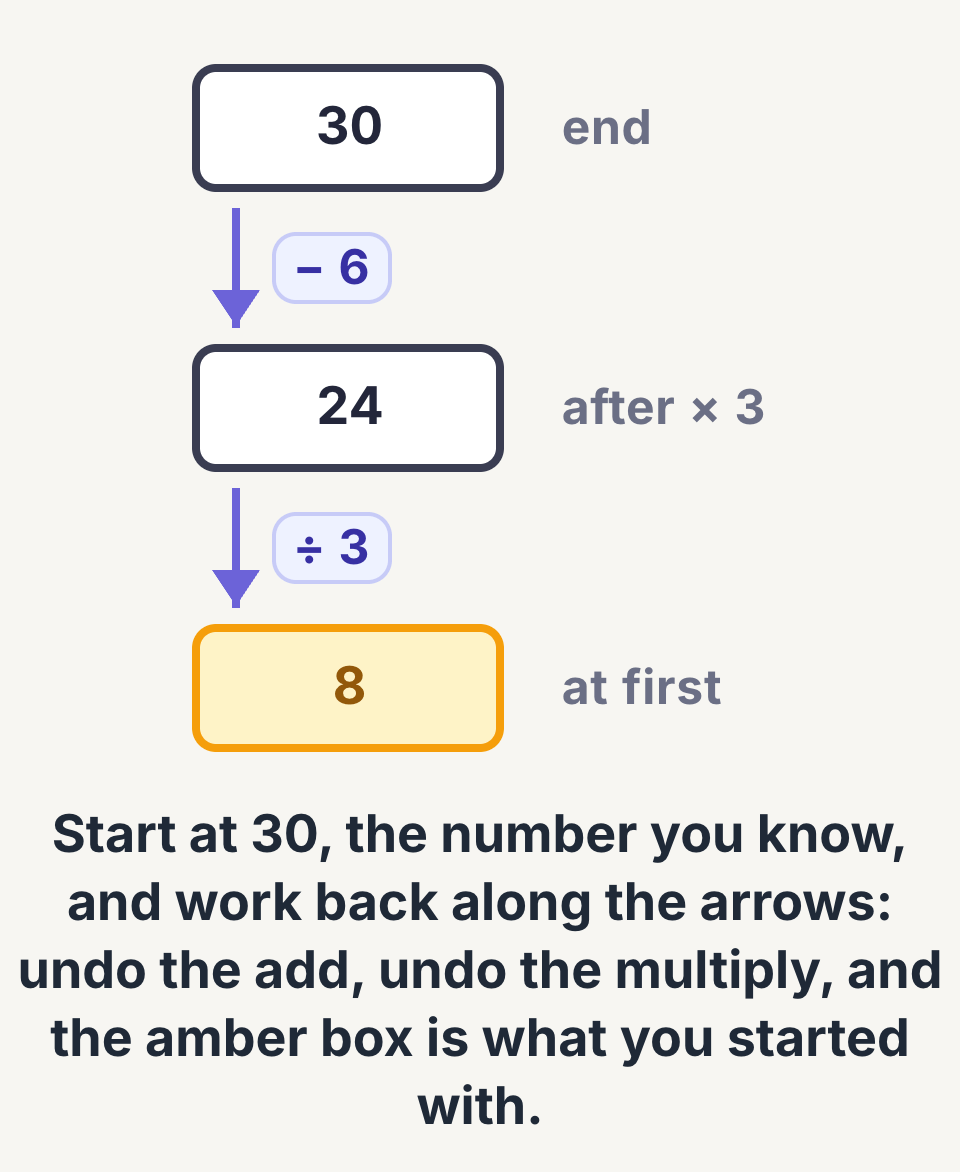 “How many did she have to begin with”Working backwards →Start from the end
From P1
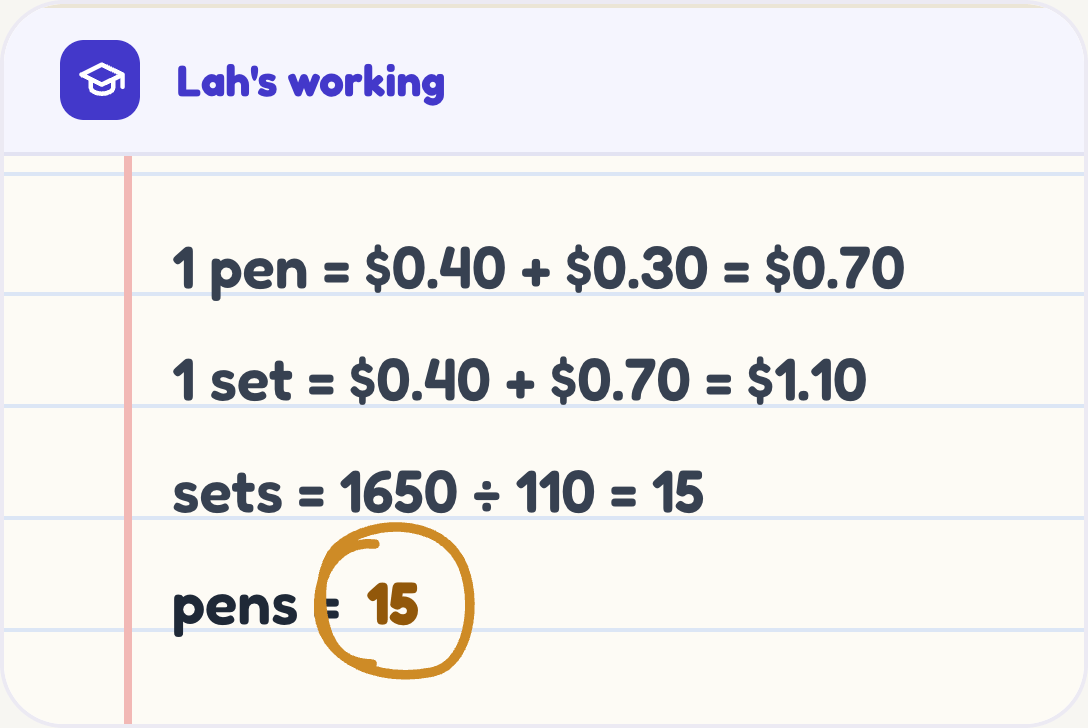 “sold in packets of 8”Grouping method →Sold in fixed sets
From P2
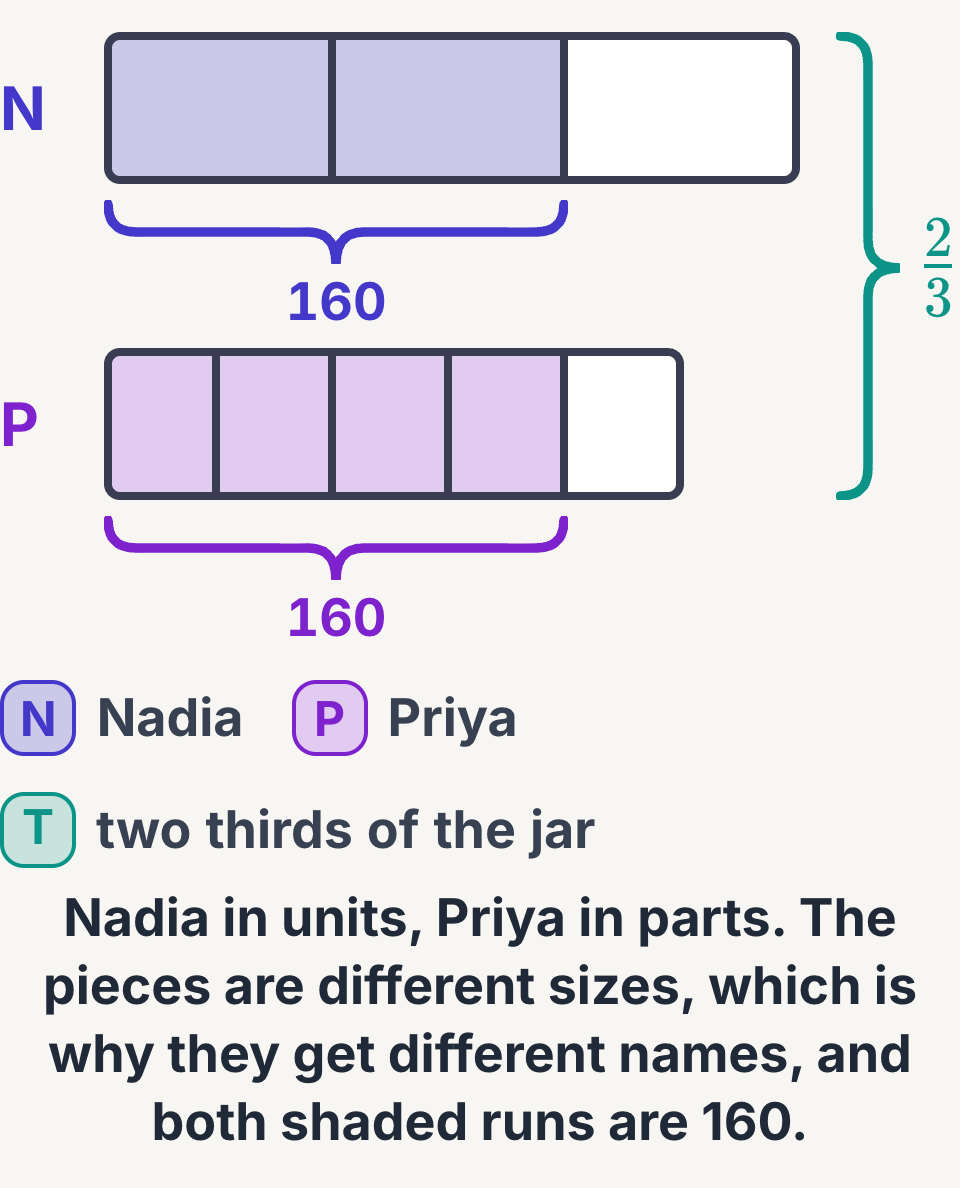 “in the ratio 3 : 4”Units and parts method →Find 1 unit first
From P3
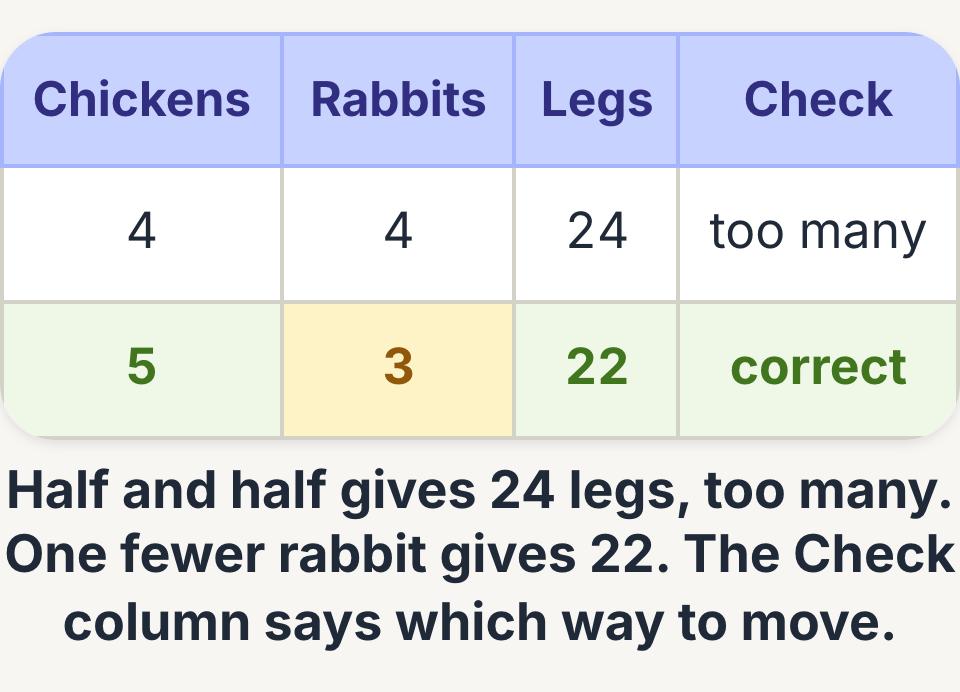 “made up of five-dollar notes and ten-dollar notes”Guess and check →Small numbers, two kinds
From P3
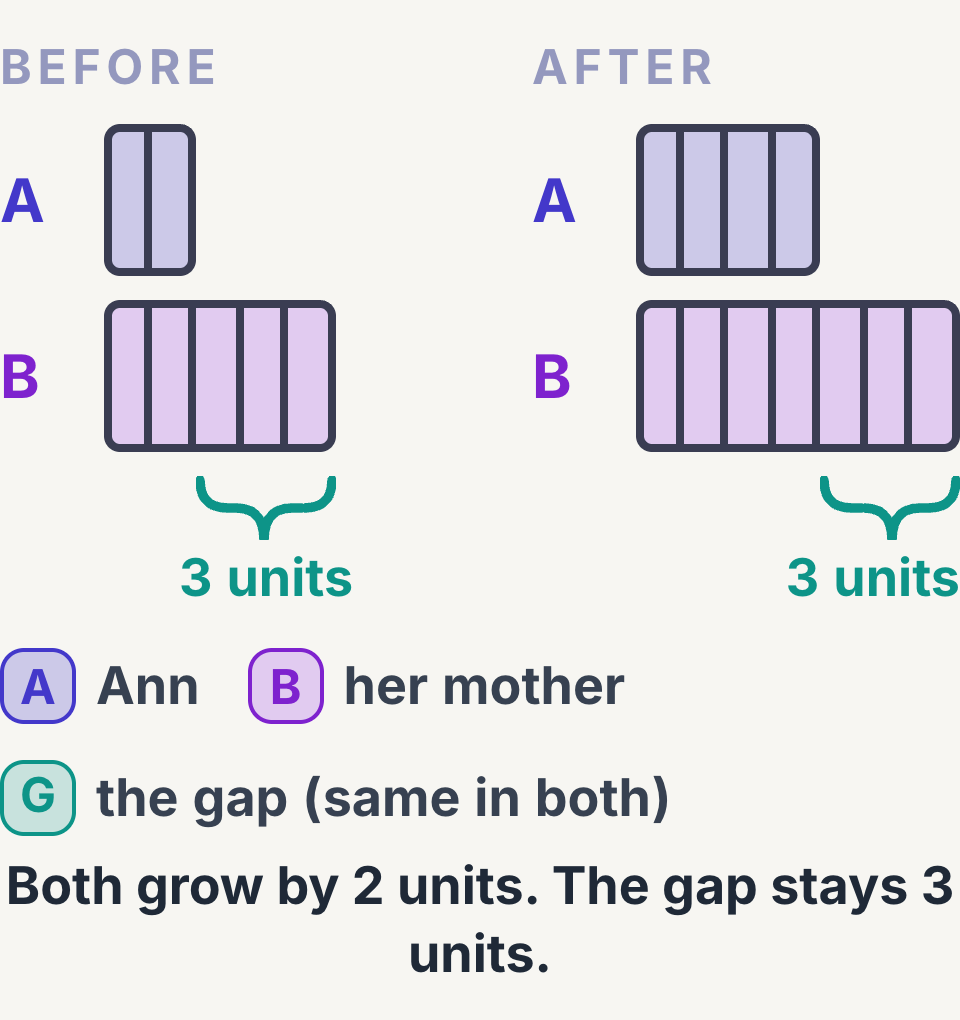 “gave of his share to”Constant total and constant difference →What did not change?
From P3
 “8 heads and 22 legs”Assumption method →Two kinds, two totals
From P4
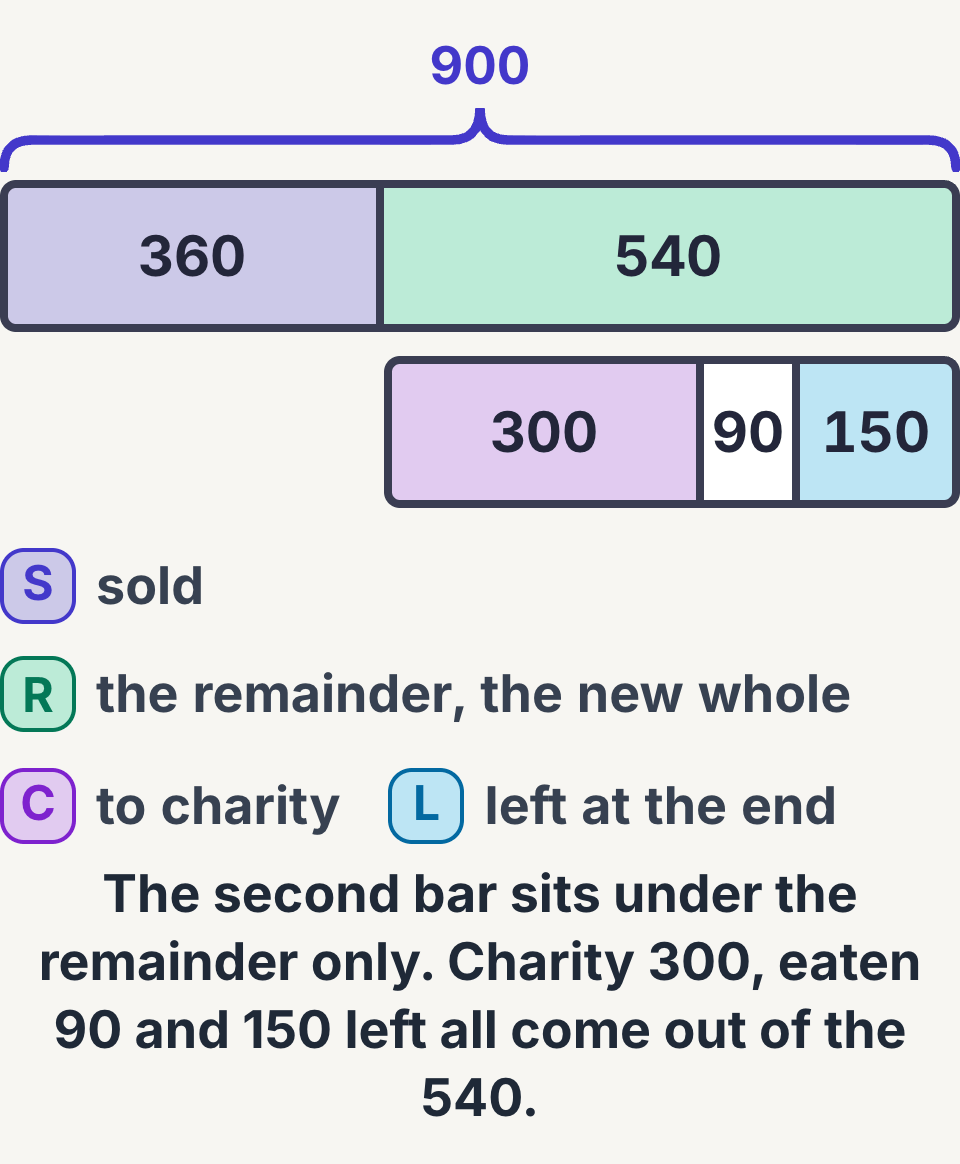 “of the remainder”Branching method →Of the remainder
From P5
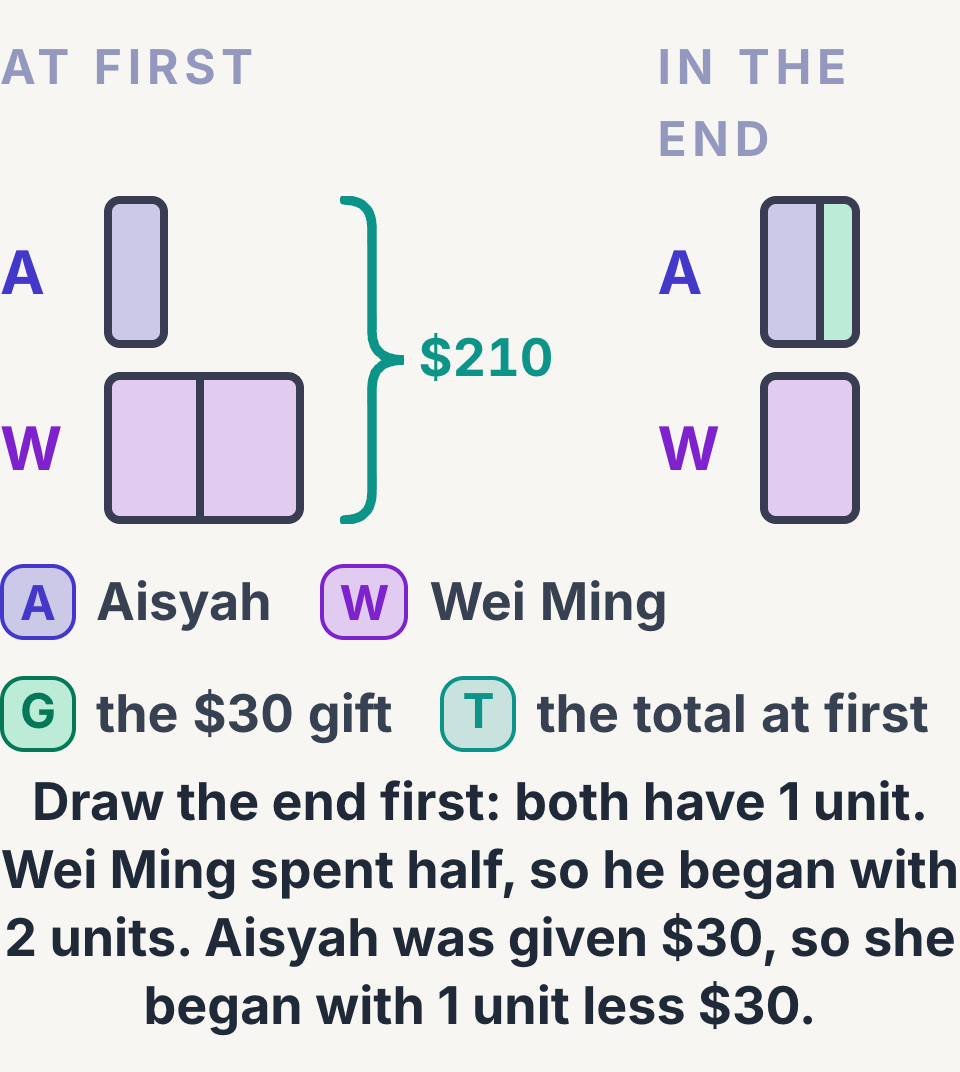 “In the end they each had the same amount”Equal stage method →They end up equal
From P5
The year map
When are heuristics taught in primary school?
Each method starts in one year and stays to the PSLE. By P5 a child holds every method here, which is why P5 problem sums feel harder: the work is choosing.
- Bar modelFrom P1
- Systematic listFrom P1
- Before and after methodFrom P1
- Working backwardsFrom P1
- Grouping methodFrom P2
- Units and parts methodFrom P3
- Guess and checkFrom P3
- Constant total and constant differenceFrom P3
- Assumption methodFrom P4
- Branching methodFrom P5
- Equal stage methodFrom P5
- Give a representation
- Make a calculated guess
- Go through the process
The mix-ups
The heuristics children mix up
Each pair solves questions that look alike. The question underneath tells you which one to reach for.
Guess and check or assumption method?
Guess and check →Are the numbers small? Then a two-row table is quicker and just as valid. This method earns its keep when guessing would take many rows.
Assumption method →Are the numbers big? The assumption method gets there in one calculation instead of several rows, and it is the faster road once a child trusts it.
Before and after method or working backwards?
Is the change a chain of steps with only the ending known? Then undo them one at a time rather than drawing two states.
Bar model or branching method?
Does a fraction apply to what is left rather than to the whole? Then the bar splits twice, and the second split sits under the remainder only.
Units and parts method or branching method?
Does a second fraction apply to what is left over rather than the whole? Then split the remainder first and count units afterwards.
The twelve
What are the 12 heuristics?
Singapore schools group twelve heuristics in four families. They come from MOE and NIE teaching papers; the syllabus document itself names none.
Give a representation
Turn the words into something you can look at, so the relationship is visible before any arithmetic.
- Draw a diagram or model
- Make a systematic list
- Draw a table
Make a calculated guess
Start from a sensible guess and let what goes wrong tell you where the answer is.
- Guess and check
- Make a supposition
- Look for patterns
Go through the process
Follow what happens to the quantities, in order, and hold on to the thing that never moved.
- Act it out
- Work backwards
- Use before and after
Change the problem
Say the problem another way, make it smaller, or solve one part first.
- Restate the problem
- Simplify the problem
- Solve part of the problem
The PSLE rule
Does the PSLE accept any method?
Ministry of Education
“Unless otherwise stated, there is also no fixed method of solving PSLE Maths questions.”
- Guess and check, with each try shown
- A model, or no model at all
- Algebra instead of units
Marks go to the maths the working shows, set out clearly, unless the question asks for a particular method.
At home
How to help your child choose a method
Read for the words
Ask your child to underline the phrase that says what kind of question it is.
Name the method
Before any sum, ask which method and why. One sentence is enough.
Draw or write it
Let the method do the work: the bars, the table, the chain of undo steps.
Check it back
Put the answer back into the question. Does every number still fit?
These are Pólya's four steps, the frame under every heuristic. The pause between reading and calculating is where the method gets chosen.
Questions
Maths heuristics: what parents ask
When are heuristics taught in primary school?
From P1: bar model, systematic list, before and after method, working backwards. Then grouping method in P2; units and parts method, guess and check, constant total and constant difference in P3; assumption method in P4; branching method, equal stage method in P5. Each stays to the PSLE.
Is guess and check accepted in the PSLE?
Yes, when the working shows each try. MOE says there is no fixed method for PSLE Maths questions: any method earns the marks when the maths in the working is correct and clear.
What is the difference between supposition and assumption?
There is none. The supposition method and the assumption method are two names for one method.
Does MOE prescribe the heuristics?
No. The primary maths syllabus names no heuristic. The twelve come from MOE and NIE teaching papers, and schools teach them in that grouping.
How does my child know which heuristic to use?
By the words in the question. Each method has a tell, such as "of the remainder" for branching, and the method finder on this page lists the words for every one.
PSLE ready, lah.
See which method your child reaches for
Every StudyLah worked solution names its method, so you can tell whether the problem was the method or the arithmetic.